0
komentar
0
komentar
Index to Finding Dog Videos on my Youtube Channels:
Subscribe now! Supernaturalbc2008 & Supernaturalbc2009
Here is a collection of free how to videos for training dogs using positive (force free) approaches to do basic behaviors, tricks, dog sports and service dog tasks.
There are also videos on training principles and applications, natural history of dogs, husbandry (care and play), improving your observation skills and more. Stay tuned as more video are added all the time!
Please share them with others who can benefit from them. CC means the video have been closed captioned for the hearing impaired and non-native English speakers.
Getting Started in Clicker Training
Dog Training Made Easy
Basic Clicker Training Equipment
Getting Started with Clicker Training CC
Capturing a Sit
Adding a Cue to a New Behavior (sit example) CC
Proofing A Cue for Handler Position etc CC
Life Skill: Self Control, Leave it or Zen
Capturing Eye Contact CC
Teaching a Nose Target
Shaping a Paw Target from a Nose Target
Basic Paw Target Work the Clock
Adding Distance to a Paw Target (and other behaviors)
Adding Duration to a Behavior
Praise vs Marker Word
Generalizing Eye Contact
Three Ways to Increase Value of Kibble for Training
Teaching Take & Give CC
Shaping a Hold with Tugging CC
Leash Handling Skills
Using Food Tubes CC NEW!
Training Triangle (Building Reinforcement History for Success) CC
Lumping and Splitting Criteria CC
Counter Conditioning Desensitization, & Aversive Counter Conditioning CC
Counter Conditioning the Clicker CC (but clicks not marked)
Trigger Stacking & Stress Hormones
Training with Opposites CC
Opposition Reflex
Ian Dunbar on using Classical Conditioning to Overcome Fear CC
Does Your Dog Understand a Verbal Cue? CC
Putting an Unwanted Behavior under Stimulus Control CC
Stimulus Control "The No" Part 2
Habits of Effective Clicker Trainers
Part 1 Using Rewards CC
Part 2 Timing CC
Part 3 Criteria CC
Part 4 Trainer Focus
Clicker Training Puppies
5 week old Puppies Sit
7.5 Week old Puppies Leave it CC
Socializing a Puppy to Potentially Scary Objects CC
Impulse Control Behaviors
Leave it or Zen
Self Control Through Doorways 1 dog
Self Control Through Doorways 2 dogs
Stimulus Control: Putting A Unwanted Behavior on Cue Part 1
Stimulus Control "The No" Part 2 NEW!
Training Recall
Part 1 Capturing the Check in CC
Shaping a Recall Part 2
Part 3 Resisting Distractions CC
Part 4 Premack Principle
Dog Care nail clipping, feeding, toys etc
Crate Training Tips CC
Is Your Dog Scared of Having her Nails Clipped?
Teeth Brushing: Teaching a Dog to Be Comfortable CC
Raw Feeding for Dogs Part 1 Introduction
Raw Feeding Part 2 Myths and Facts
Cheap Durable Squeaky Toys!
3 Great Toys for Dogs
Free Tug Toys You Can Make CC
3 Toys from Garden Hose
4 Tips to Getting Your Dog to Take Pills CC
Front Leg Protection: dogs with surgery/injuries CC NEW!
20 Activities for Dogs on Crate Rest for injury, TPLO surgery, Heartworm Treatment etc CC
Exercise and Dogs: How Much is Enough? CC
Interrupting Dog to Dog Play: Teaching Enough
Sue Ailsbys OLD Training Levels (an excellent program to train your dog through to teach both you and the dog the basics of clicker training. See her web-site for more information.)
Level 1 Come, down, sit, nose target, zen (leave it) CC
Level 2 Part A Distance (around), Down, Go Mat, Handling, Sit, Stand, (stick) Target, Watch, Zen CC
Level 2 Part B Sit stay, down stay, stand stay, come, leash manners, crate, trick CC
Level 3 Part A Crate, go bed, down stay, sit stay, front, finish, heel, retrieve, shaped trick (shut the door), target, contact CC
Level 3 Part B Stand stay, sit at 10 feet, down at 10 feet, watch, distance (around) at 4 feet, stand, loose leash, handling (pee on cue), scenting CC
General Training Principles & Approaches
Jessie Learns by Mimicry
Chaining (forward)Behaviors
Chaining Multiples of a Behavior
Back Chaining
4 Ways to Add Distance to a Behavior
Shaping a Paw Target from a Nose Target
Chaining a Paw-Sit for Send outs
Does Your Dog REALLY Understand a Verbal Cue? CC
Putting an Unwanted Behavior Under Stimulus Control CC
Teaching a Dog to Follow a Finger Point CC
Teaching Opposites to Dogs CC
Recall
Capturing the Check in Part 1
Shaping the Recall Part 2
Distractions Part 3
Premacking Part 4
Retrieve
Bird Dog Retrieve to Hand part 1 CC
Bird Dog Retrieve to Hand Part 2 CC
Secrets of Teach a Hot Dog Retrieve Part 1
Hot Dog Retrieve Part 2
Hot Dog Retrieve Part 3
Newspaper Retrieve with Verbal Cue Only
Newspaper Retrieve Part 2
Unloading the Dryer Part 1 (Put Your Toys Away)
Unloading Dryer Part 2
Unloading Dryer Part 3
Unloading the Dryer Part 4
Unloading Dryer Part 5
Dumbbell Retrieve
Dumbbell Over 2 Hurdles
Picking up Small Objects
Dog Dish Retrieve
Plastic Dish Retrieve
Preparing for the Competition Ring
Introducing a Dog to Ring Gates: Desensitization
Building Focus in the Ring
Focussed Ring Gate Entries and Exits
Rear End Awareness
Rally Obedience training
CKC Rally O Trial
Proofing Eye Contact heeling on uneven surface
Rally O Practice
CARO Course 1 Lucy For Exhibition Only
CARO Course 2 Lucy First CARO Qualifying run (Q)
CARO Course 3 Lucy Second CARO Q
Level 1 Course Lucy First Q in Cyber Rally
Level 1 Course Lucy Second Q in Cyber Rally
Level 1 Course Jessie (her first Q ever!)
Pivots and Turns Tutorial
Subscribe now! Supernaturalbc2008 & Supernaturalbc2009
Here is a collection of free how to videos for training dogs using positive (force free) approaches to do basic behaviors, tricks, dog sports and service dog tasks.
There are also videos on training principles and applications, natural history of dogs, husbandry (care and play), improving your observation skills and more. Stay tuned as more video are added all the time!
Please share them with others who can benefit from them. CC means the video have been closed captioned for the hearing impaired and non-native English speakers.
Getting Started in Clicker Training
Dog Training Made Easy
Basic Clicker Training Equipment
Getting Started with Clicker Training CC
Capturing a Sit
Adding a Cue to a New Behavior (sit example) CC
Proofing A Cue for Handler Position etc CC
Life Skill: Self Control, Leave it or Zen
Capturing Eye Contact CC
Teaching a Nose Target
Shaping a Paw Target from a Nose Target
Basic Paw Target Work the Clock
Adding Distance to a Paw Target (and other behaviors)
Adding Duration to a Behavior
Praise vs Marker Word
Generalizing Eye Contact
Three Ways to Increase Value of Kibble for Training
Teaching Take & Give CC
Shaping a Hold with Tugging CC
Leash Handling Skills
Training Concepts
Baiting, Luring & Rewarding CCUsing Food Tubes CC NEW!
Training Triangle (Building Reinforcement History for Success) CC
Lumping and Splitting Criteria CC
Counter Conditioning Desensitization, & Aversive Counter Conditioning CC
Counter Conditioning the Clicker CC (but clicks not marked)
Trigger Stacking & Stress Hormones
Training with Opposites CC
Opposition Reflex
Ian Dunbar on using Classical Conditioning to Overcome Fear CC
Does Your Dog Understand a Verbal Cue? CC
Putting an Unwanted Behavior under Stimulus Control CC
Stimulus Control "The No" Part 2
Habits of Effective Clicker Trainers
Part 1 Using Rewards CC
Part 2 Timing CC
Part 3 Criteria CC
Part 4 Trainer Focus
Clicker Training Puppies
5 week old Puppies Sit
7.5 Week old Puppies Leave it CC
Socializing a Puppy to Potentially Scary Objects CC
Impulse Control Behaviors
Leave it or Zen
Self Control Through Doorways 1 dog
Self Control Through Doorways 2 dogs
Stimulus Control: Putting A Unwanted Behavior on Cue Part 1
Stimulus Control "The No" Part 2 NEW!
Training Recall
Part 1 Capturing the Check in CC
Shaping a Recall Part 2
Part 3 Resisting Distractions CC
Part 4 Premack Principle
Dog Care nail clipping, feeding, toys etc
Crate Training Tips CC
Is Your Dog Scared of Having her Nails Clipped?
Teeth Brushing: Teaching a Dog to Be Comfortable CC
Raw Feeding for Dogs Part 1 Introduction
Raw Feeding Part 2 Myths and Facts
Cheap Durable Squeaky Toys!
3 Great Toys for Dogs
Free Tug Toys You Can Make CC
3 Toys from Garden Hose
4 Tips to Getting Your Dog to Take Pills CC
Front Leg Protection: dogs with surgery/injuries CC NEW!
20 Activities for Dogs on Crate Rest for injury, TPLO surgery, Heartworm Treatment etc CC
Exercise and Dogs: How Much is Enough? CC
Interrupting Dog to Dog Play: Teaching Enough
Sue Ailsbys OLD Training Levels (an excellent program to train your dog through to teach both you and the dog the basics of clicker training. See her web-site for more information.)
Level 1 Come, down, sit, nose target, zen (leave it) CC
Level 2 Part A Distance (around), Down, Go Mat, Handling, Sit, Stand, (stick) Target, Watch, Zen CC
Level 2 Part B Sit stay, down stay, stand stay, come, leash manners, crate, trick CC
Level 3 Part A Crate, go bed, down stay, sit stay, front, finish, heel, retrieve, shaped trick (shut the door), target, contact CC
Level 3 Part B Stand stay, sit at 10 feet, down at 10 feet, watch, distance (around) at 4 feet, stand, loose leash, handling (pee on cue), scenting CC
General Training Principles & Approaches
Jessie Learns by Mimicry
Chaining (forward)Behaviors
Chaining Multiples of a Behavior
Back Chaining
4 Ways to Add Distance to a Behavior
Shaping a Paw Target from a Nose Target
Chaining a Paw-Sit for Send outs
Does Your Dog REALLY Understand a Verbal Cue? CC
Putting an Unwanted Behavior Under Stimulus Control CC
Teaching a Dog to Follow a Finger Point CC
Teaching Opposites to Dogs CC
Recall
Capturing the Check in Part 1
Shaping the Recall Part 2
Distractions Part 3
Premacking Part 4
Retrieve
Bird Dog Retrieve to Hand part 1 CC
Bird Dog Retrieve to Hand Part 2 CC
Secrets of Teach a Hot Dog Retrieve Part 1
Hot Dog Retrieve Part 2
Hot Dog Retrieve Part 3
Newspaper Retrieve with Verbal Cue Only
Newspaper Retrieve Part 2
Unloading the Dryer Part 1 (Put Your Toys Away)
Unloading Dryer Part 2
Unloading Dryer Part 3
Unloading the Dryer Part 4
Unloading Dryer Part 5
Dumbbell Retrieve
Dumbbell Over 2 Hurdles
Picking up Small Objects
Dog Dish Retrieve
Plastic Dish Retrieve
Preparing for the Competition Ring
Introducing a Dog to Ring Gates: Desensitization
Building Focus in the Ring
Focussed Ring Gate Entries and Exits
Rear End Awareness
Rally Obedience training
CKC Rally O Trial
Proofing Eye Contact heeling on uneven surface
Rally O Practice
CARO Course 1 Lucy For Exhibition Only
CARO Course 2 Lucy First CARO Qualifying run (Q)
CARO Course 3 Lucy Second CARO Q
Level 1 Course Lucy First Q in Cyber Rally
Level 1 Course Lucy Second Q in Cyber Rally
Level 1 Course Jessie (her first Q ever!)
Pivots and Turns Tutorial
CARO Novice Moves (Canadian Association of Rally Obedience)
1. weave once
2. halt sit stand
3. halt sit down
4. halt sit down sit
5. halt sit walk around
6. sit down walk around
7. right turn
8. left turn
9. about turn right
10. about U turn left
11. 270 right turn
12. 270 degree left turn
13. 360 degree right turn
14. 360 degree left turn
15. call front forward right
16. call front forward left
17. call front finish right
18. call front finish left
19. slow 20. fast 21. normal pace
22. halt side step right halt
23. 90 degree pivot right
24. 90 degree pivot left-tutorial
25. spiral right dog outside
26. spiral right dog inside
27. halt 1, 2, 3 steps forward
28. halt right turn 1 step halt
29. straight figure 8
CARO Advanced Level
44. Moving Down Around CC
CARO Working level
Barrel Racing
Agility
Clicker Training the Agility Teeter Totter
Shaping the Tunnel
Forest Agility
Lawn Chair Games
Cat House & Tunnel
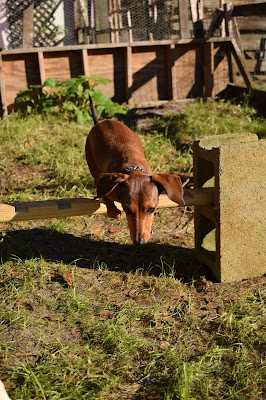
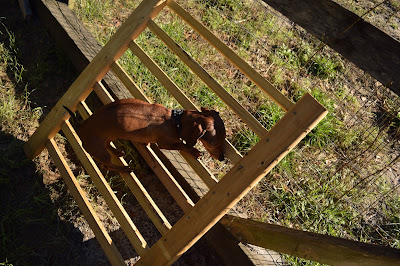
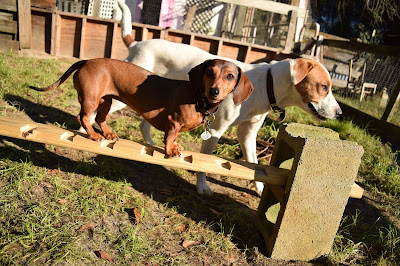
Bench Jumping
Vacant Lot Agility
12 Weave Poles
Barrel Racing as preparation for front crosses
Treibball
Basics of Treibball CC
Treibball Practice in the House CC
Dog Learns Treibball
Nose Touch
Basic Nose Touch with Ball Biter
Shaping a Paw Target from a Nose Target
Send Outs Behind Ball
3 Tips for Playing Treibball
Handling Skill Games
Intermediate Treibball Practice
How to Make a Treibball Holder
Scenting
Muffin Tin Game CC
Shell Game CC
Observing On and Off Scent Trail
Trailing a Person
Scenting Glove in the Snow
Scent Fun with a Blanket
Scent Hurdle Training
See also Scenting under Assistance Dog Tasks
Tricks
Dualing Dogs -Collection of Tricks Comparison of 2 Dog Styles
Ladder Walking CC
Ring Toss
Leg Weave CC
Cover Your Eyes
Advanced Tricks
Get in the Suitcase
Stop, Drop & Roll
Your Feet on Mine
Getting Started with Skateboarding CC
How to Teach Your Dog to Skip Rope CC
Equipment for Dog Jump Rope
Turn & Backing Between Legs-Freestyle move CC
Observation Skills
Dog Play Techniques
Calming Signals During Training
Dog Gait Observation: Single Tracking Dogs Searching for Toy
Observe Lucy as she explores the house for the first time and plays with Jessie
CKC Rally Obedience Trial-Where are the points lost?
Scenting at Table
Compare and Contrast 2 dogs Skipping
Dog Language: A Pat on the Head CC (on screen)
Techniques to Use with Fearful/Reactive/Aggressive Dogs
Counter Conditioning the Clicker CC (but clicks not marked)
BAT Behavioral Adjustment Training for Fear of Bicycle
Teaching Look at That (LAT) Game
Making a BAT Decoy Dog
Ian Dunbar on using Classical Conditioning to Overcome Fear CC
Leash Skills for Clicker Training
Leash Walking Techniques for Aggressive, Reactive or Overexcited Dogs
Using Shaping and targeting to Overcome fear in Dogs Part 1
Using Shaping and targeting to overcome fear in Dogs Part 2 Adding Sound
Assistance Dog Tasks
Body Targeting
Out of Harms Way Protecting Your Service Dog
Shaping a Shoulder Target
Backing into Small Spaces (seat on busses and places)
Part 2 Backing into Small Spaces
Pulling Tasks
Tugging Part 1 CC
Tugging Part 2 CC
Pulling Up Blinds Part 1 CC
Pulling up Blinds Part 2 CC
Zipper Pull CC
Zipper Pulling Up CC
Zipper Pulling Down
Pushing Tasks
Pushing Door Part 1 CC
Pushing the Door Part 2 CC
Assistance Dog Retrieve
Teaching a Nose Touch
Touching Different Objects CC
Teaching Take and Give
Teaching Hold with Tugging CC
Generalizing a Hold CC
Fine Tuning the "Take" CC
Light Switches
Shaping Explained Part 1 CC
Part 2 CC
Off and On with Extension CC
Sound & Other Medical Alerts (Diabetes, Alzheimers etc)
One Way Alert CC
Two Way Alert CC
Wheelchair Skills & Tasks
Part 1 CC
Part 2 CC
Unloading the Dryer Part 1 (Put Your Toys Away)
Part 2
Part 3
Part 4
Part 5
Scenting
Pairing Alert Behavior with the Scent CC
Putting Sniff on Cue CC
Introducing Containers CC
Scent Remedial Training CC
Making a Scent Training Wheel CC
Introducing a Scent Training Wheel to a Dog CC
Using the Scent Wheel to Add Distractions CC
Beginning the Search part A i CC
Beginning the Search Part A ii
Beginning the Search Part B
Height of Scent Part 1
Height of Scent Part 2
Scent Dilution Process
Yard Search Part 1
Yard Search Part 2 Adding Height
Blind Scent Finds and Indication
Scenting for the First Time in a Public Washroom
Equipment
Quick Release Adjustable Leashes
Other
Making a Watercolor Portrait of Your Dog
Multimedia Portrait of a HorseIan Dunbar Using Classical Conditioning to Overcome Fear


 equate to that of a bear attack on an adult, in terms of the shock, overwhelming fear and residual stress. The emotional impact on the child and the adult is huge. The difference is the adult will talk about their experience until the day they can no longer speak. The child will not talk about it and greatly needs to. This is because the child sees the sad faces of his parents anytime the topic comes up. They remain silent to save their parents from additional grief